Wednesday, 22 June 2016

Sauk Village Administrator / Public Safety Director’s Report - June 14, 2016


Sauk Village Administrator / Public Safety Director’s Report


By: Director JW Fairman
June 14, 2016


URC Reported Crime:
Year to date reported UCR crime is 53% lower than UCR crime reported for the same period a year ago. Burglary and Theft are down 72% for the same reported period a year ago.
 
Vacant Housing:
  • The Village’s master vacant list (as of June 1, 2016) shows 412 vacant homes:

      Vacant                       378 houses
      Vacant/Occupied     34 houses


Scavenger Contract Update:
As I stated at the last Village Board meeting Sauk Village failed to execute the terms of its contractual agreement with its scavenger vender. Its failure to execute those terms (adjustments of annual rate increases and failure to providing accurate housing counts) resulted in non-payment of services to the vender of $218,941.80.
Months ago, when I found out about these deficiencies, I made the necessary corrections. I have also been meeting with the vender in an attempt to bring this matter to a fair and equable solution for both parties. After considerable negotiations, the vender has agreed to forgive the full debt owed by the Village in exchange for a new 10 year agreement that will provide exact language spelling out each party’s obligations.
 
Ordinance/Resolutions/ Amendments:  
  • Staff Recommendation for request not to exceed $15,000 to update the “Civic” computer system on all financial components of the Village has been completed by our attorneys and sent to the Finance Committee on 4/12/16. We are asking the Committee for a determination on this matter.
 
Miscellaneous:
  • Mr. Rao secured a $35,000 Lighting Grant from the IL. Clean Energy Commission.

  • Staff has completed the necessary paperwork for the County for no cash bid applications on three (3) land parcels in TIF #4. Petitions for tax deeds will be filed by the end of June.

  • Owens Group has completed the Employees’ Handbook and is in the final stages of completing the Sauk Village personnel manual. A presentation will be ready for the Board in mid-July

  • Owens Group is assisting me in establishing Department Safety Committees which will meet monthly and be assessed with the Owens Group Quarterly in efforts to control budgetary expenditures.

  • Staff has made a recommendation to the Mayor’s Office regarding employee insurance coverage. After his review, the Mayor will make his recommendation.

  • I have conveyed to staff that beginning in August, quarterly budget reviews with Department Heads will begin.

  • I have been defined as staff’s single point of contact with Cal-Com. The purpose is to assure strict contract compliance. On a positive note; I am pleased to report that as of this date all emergency communications are functional.

  • I am requesting our Attorney to draft a Resolution for the disposal of Police vehicles and seized property.

  • Finally, budgeted revenue collections for the period of 1/1 through 6/1 - 2016 vs 2015 are up by 22%.

Tuesday, 21 June 2016

Sauk Village Homeland Security (ESDA) Report - June 14, 2016


Sauk Village Homeland Security (ESDA) Report


June 14, 2016


Over the past 3 weeks, the ESDA responded to 18 calls. The ESDA department responded to 6 fire alarms, 4 vehicle accidents, 1 brush fire, 1 dumpster fire, 2 school patrol, 3 assist other agency, and 1 transformer fire.

This Day In History - June 21st


1788
U.S. Constitution Ratified
New Hampshire becomes the ninth and last necessary state to ratify the Constitution of the United States, thereby making the document the law of the land.

By 1786, defects in the post-Revolutionary War Articles of Confederation were apparent, such as the lack of central authority over foreign and domestic commerce. Congress endorsed a plan to draft a new constitution, and on May 25, 1787, the Constitutional Convention convened at Independence Hall in Philadelphia. On September 17, 1787, after three months of debate moderated by convention president George Washington, the new U.S. constitution, which created a strong federal government with an intricate system of checks and balances, was signed by 38 of the 41 delegates present at the conclusion of the convention. As dictated by Article VII, the document would not become binding until it was ratified by nine of the 13 states.

Beginning on December 7, five states–Delaware, Pennsylvania, New Jersey, Georgia, and Connecticut–ratified it in quick succession. However, other states, especially Massachusetts, opposed the document, as it failed to reserve undelegated powers to the states and lacked constitutional protection of basic political rights, such as freedom of speech, religion, and the press. In February 1788, a compromise was reached under which Massachusetts and other states would agree to ratify the document with the assurance that amendments would be immediately proposed. The Constitution was thus narrowly ratified in Massachusetts, followed by Maryland and South Carolina. On June 21, 1788, New Hampshire became the ninth state to ratify the document, and it was subsequently agreed that government under the U.S. Constitution would begin on March 4, 1789. In June, Virginia ratified the Constitution, followed by New York in July.

On September 25, 1789, the first Congress of the United States adopted 12 amendments to the U.S. Constitution–the Bill of Rights–and sent them to the states for ratification. Ten of these amendments were ratified in 1791. In November 1789, North Carolina became the 12th state to ratify the U.S. Constitution. Rhode Island, which opposed federal control of currency and was critical of compromise on the issue of slavery, resisted ratifying the Constitution until the U.S. government threatened to sever commercial relations with the state.

On May 29, 1790, Rhode Island voted by two votes to ratify the document, and the last of the original 13 colonies joined the United States. Today the U.S. Constitution is the oldest written constitution in operation in the world.

This Day In History - June 20th


1863
West Virginia Enters The Union

During the Civil War, West Virginia is admitted into the Union as the 35th U.S. state, or the 24th state if the secession of the 11 Southern states were taken into account. The same day, Arthur Boreman was inaugurated as West Virginia’s first state governor.


Settlement of the western lands of Virginia came gradually in the 18th century as settlers slowly made their way across the natural Allegheny Plateau barrier. The region became increasingly important to the Virginia state government at Richmond in the 19th century, but the prevalence of small farms and absence of slavery began to estrange it from the east. Because slaves were counted in allotting representation, wealthy eastern planters dominated the Virginia legislature, and demands by western Virginians for lower taxes and infrastructure development were not met.


When Virginia voted to secede after the outbreak of the Civil War, the majority of West Virginians opposed the secession. Delegates met at Wheeling, and on June 11, 1861, nullified the Virginian ordinance of secession and proclaimed “The Restored Government of Virginia,” headed by Francis Pierpont. Confederate forces occupied a portion of West Virginia during the war, but West Virginian statehood was nonetheless approved in a referendum and a state constitution drawn up. In April 1863, U.S. President Abraham Lincoln proclaimed the admission of West Virginia into the Union effective June 20, 1863.

Setting The Record Straight


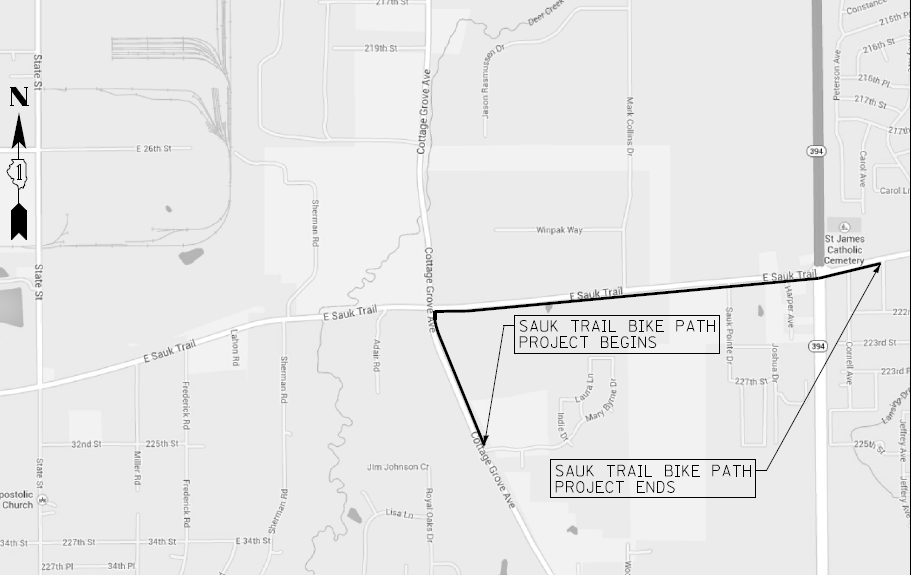
Just one week after a resolution failed to apply for free Federal funding to complete a walking/bike path between 394 to Cottage Grove and from Sauk Trail to Mary Byrne Drive (at no cost to village residents) the village board will meet to discuss tonight SPENDING Village funds to place a fence around a detention pond that has been in place for years and only because Parks & Recs under the direction of Trustee Jones are unable to supervise the children during a summer program.


Tonight's discussion is supposed to be about children's safety however, the majority of the board voted against a path that would have provided a safe route along Sauk Trail not only for the young that must walk to Bloom Trail High School but also for adults that have a job in our industrial areas along Sauk Trail.


I've been asked by many residents about the path that have been misled to think that the village could not afford to upkeep or maintain the path years down the road after it was installed.

That is totally false!

While Sauk Village was the sponsor for this project the larger portion of the path is within the Steger boundaries which, Steger would be responsible for maintaining.


In addition, this project was no secret since I updated the board at multiple village board meetings and informed residents during the Meet the Mayor events that the village was in discussions with the State, County, Village of Steger and SSMMA.

Perhaps residents should be asking Trustees if the village does not have the resources to upkeep a free path where will the funds come from to upkeep and maintain a fence around a detention pond and if Parks & Recs are unable to keep the children out of a detention area how will they keep them off a fence.

Lastly, the votes against the resolution last week to apply for free Federal funding was politically motivated and was a vote to prevent the village from moving forward. It should be interesting to see how many use this path in their campaign material within the next twelve months.

Mayor David A. Hanks


Sunday, 19 June 2016

Sauk Village Administrative Services Board Meeting Report - June 14, 2016


Sauk Village Administrative Services Board Meeting Report

June 14, 2016 


By: Director Sherry Jasinski


Village Stickers are on Sale they must be displayed by July 1,2016


Cost of Sticker

  • $30.00 for a passenger plate

  • $30.00 Motorcycles
  • $48.00 for Truck
  • One senior discount per household of $20.00
  • July 1, 2016 Village Stickers fee will be doubled


June 2, 2016 Court Call
  • 87 tickets on the court docket

  • 3 tickets were found guilty
  • 84 were found liable and fines were doubled for failure to appear


Payments received for J-tickets from 05/01/16-6/13/16 =$8,155.00


Liens paid to date =$19,026.62 since filing started in April 2016


Village Hall will be closed July 4, 2016


This concludes my report


This Day In History - June 19th


1938

Montana Flood Causes Train Wreck

On this day in 1938, a flood in Montana kills 46 people and seriously injures more than 60 when it washes out train tracks.
Custer Creek is a small winding river that runs through 25 miles of the Great Plains on its way to the Yellowstone River. Minor streams like Custer Creek are prone to flash floods because their small capacity can quickly and easily be exceeded during heavy rains.
On the evening of June 19, a track walker was sent out to check the rail lines near Custer Creek in Terry, Montana. He reported dry conditions and no problems with the tracks. However, within just a few hours, a sudden downpour overwhelmed Custer Creek. A bridge used by trains was washed out, and when the Olympian Special came through, it went crashing into the raging waters with no warning.
Two sleeper cars were buried in the muddy waters. A pitch-black night on the Great Plains made rescue efforts extremely difficult and 46 people lost their lives. The rear cars stayed above the water, but scores of passengers were seriously injured. They could not be evacuated until the following morning.

This Day In History - June 18th


1983
First American Woman In Space

From Cape Canaveral, Florida, the space shuttle Challenger is launched into space on its second mission. Aboard the shuttle was Dr. Sally Ride, who as a mission specialist became the first American woman to travel into space. During the six-day mission, Ride, an astrophysicist from Stanford University, operated the shuttle’s robot arm, which she had helped design.

Her historic journey was preceded almost 20 years to the day by cosmonaut Valentina V. Tereshkova of the Soviet Union, who on June 16, 1963, became the first woman ever to travel into space. The United States had screened a group of female pilots in 1959 and 1960 for possible astronaut training but later decided to restrict astronaut qualification to men. In 1978, NASA changed its policy and announced that it had approved six women to become the first female astronauts in the U.S. space program.

The new astronauts were chosen out of some 3,000 original applicants. Among the six were Sally Ride and Shannon Lucid, who in 1996 set a new space endurance record for an American and a world endurance record for a woman during her 188-day sojourn on the Russian space station Mir.

Friday, 17 June 2016

Sauk Village Senior Committee Report June 14, 2016


Senior Committee Report June 14, 2016


Fraud Alert!  Now that security at retail stores is bolstered by chip-enabled credit and debit cards, making it hard to counterfeit, criminals are ambushing ATMs.  Illegible card-reading devices are being installed on ATMs, gas pumps and other public-area machines that process debit cards.  Using an ATM at a bank is more secured with their 24/7 camera surveillance.

All seniors age 50 years young are invited to the Senior Committee Open Senior Activity and Friday and every Friday 12:30-3:30 p.m. with coordinators Steve Shymkus and Frank Williams.  There is no meeting, no membership and no dues, just come and join the fun with your peers.  Light refreshments and bottled water served. 
Last Friday, four more seniors joined the ‘Rummikub’ game (similar to the rummy card game) challenge.  The game is very addictive.  There are many other games available plus computer, TV and our library program. 
Several seniors have expressed an interest in having an Open Senior Activity once a month on a Saturday with a potluck meal.  The Senior Committee has approved of the Saturday event, watch for finalized details to be announced.

The Bloom Township annual senior picnic tickets will go on sale Friday, July 1st for Thursday, August 4th.

The SV Blue Grass will be closed Independence weekend Sunday, July 3rd, and for vacation Sundays, July 17th and 24th.

This Day In History - June 17th


1885
Statue of Liberty Arrives In New York Harbor


On this day in 1885, the dismantled Statue of Liberty, a gift of friendship from the people of France to the people of America, arrives in New York Harbor after being shipped across the Atlantic Ocean in 350 individual pieces packed in more than 200 cases. The copper and iron statue, which was reassembled and dedicated the following year in a ceremony presided over by U.S. President Grover Cleveland, became known around the world as an enduring symbol of freedom and democracy.


Intended to commemorate the American Revolution and a century of friendship between the U.S. and France, the statue was designed by French sculptor Frederic-Auguste Bartholdi (who modeled it after his own mother), with assistance from engineer Gustave Eiffel, who later developed the iconic tower in Paris bearing his name. The statue was initially scheduled to be finished by 1876, the 100th anniversary of America’s Declaration of Independence; however, fundraising efforts, which included auctions, a lottery and boxing matches, took longer than anticipated, both in Europe and the U.S., where the statue’s pedestal was to be financed and constructed. The statue alone cost the French an estimated $250,000 (more than $5.5 million in today’s money).


Finally completed in Paris in the summer of 1884, the statue, a robed female figure with an uplifted arm holding a torch, reached its new home on Bedloe’s Island in New York Harbor (between New York City and Hudson County, New Jersey) on June 17, 1885. After being reassembled, the 450,000-pound statue was officially dedicated on October 28, 1886, by President Cleveland, who said, “We will not forget that Liberty has here made her home; nor shall her chosen altar be neglected.” Standing more than 305 feet from the foundation of its pedestal to the top of its torch, the statue, dubbed “Liberty Enlightening the World” by Bartholdi, was taller than any structure in New York City at the time. The statue was originally copper-colored, but over the years it underwent a natural color-change process called patination that produced its current greenish-blue hue.


In 1892, Ellis Island, located near Bedloe’s Island (which in 1956 was renamed Liberty Island), opened as America’s chief immigration station, and for the next 62 years Lady Liberty, as the statue is nicknamed, stood watch over the more than 12 million immigrants who sailed into New York Harbor. In 1903, a plaque inscribed with a sonnet titled “The New Colossus” by American poet Emma Lazarus, written 20 years earlier for a pedestal fundraiser, was placed on an interior wall of the pedestal. Lazarus’ now-famous words, which include “Give me your tired, your poor/Your huddled masses yearning to breathe free,” became symbolic of America’s vision of itself as a land of opportunity for immigrants.


Some 60 years after President Calvin Coolidge designated the statue a national monument in 1924, it underwent a multi-million-dollar restoration (which included a new torch and gold leaf-covered flame) and was rededicated by President Ronald Reagan on July 4, 1986, in a lavish celebration. Following the terrorist attacks of September 11, 2001, the statue was closed; its base, pedestal and observation deck re-opened in 2004, while its crown re-opened to the public on July 4, 2009. (For safety reasons, the torch has been closed to visitors since 1916, after an incident called the Black Tom explosions in which munitions-laden barges and railroad cars on the Jersey City, New Jersey, waterfront were blown up by German agents, causing damage to the nearby statue.)


Today, the Statue of Liberty is one of America’s most famous landmarks. Over the years, it has been the site of political rallies and protests (from suffragettes to anti-war activists), has been featured in numerous movies and countless photographs, and has received millions of visitors from around the globe.